
Feeling unsteadiness, lightheadedness, or a sudden spinning sensation can be deeply disorienting. If you or a loved one have experienced these symptoms, you know how quickly they can disrupt your daily routine—making simple activities like driving, walking down the stairs, or even getting out of bed feel daunting.
While many people associate balance issues strictly with aging or inner ear infections, persistent balance problems are often a sign of an underlying issue within your vestibular system. Understanding the difference between dizziness and vertigo is the first step toward finding relief.
In this guide, we’ll explore how your inner ear controls your stability, what specialized balance testing (VNG/ENG) involves, and when it’s time to schedule a balance evaluation with an audiologist.
Dizziness vs. Vertigo: What’s the Difference?
Although people frequently use “dizziness” and “vertigo” interchangeably, they describe two distinct physical sensations. Identifying which one you are experiencing provides crucial clues for your medical team.
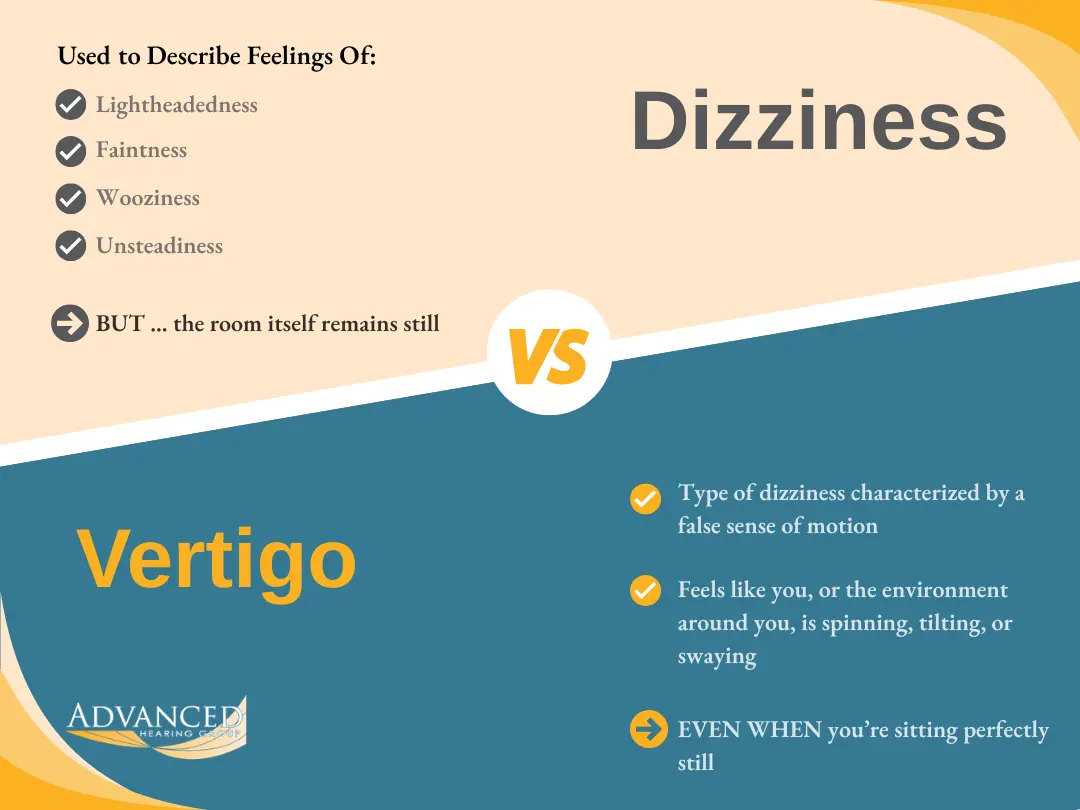
- Dizziness is a broad term used to describe feelings of lightheadedness, faintness, wooziness, or unsteadiness. You might feel off-balance, floaty, or like you’re about to pass out, but the room itself remains still.
- Vertigo is a specific type of dizziness characterized by a false sense of motion. If you have vertigo, you feel as though you, or the environment around you, is spinning, tilting, or swaying—even when you are sitting perfectly still.
Vertigo is most commonly triggered by a disruption in the inner ear’s vestibular system, which is responsible for keeping you oriented in space.
How Your Inner Ear Controls Your Balance
When you think of your ears, hearing is likely the first function that comes to mind. However, your inner ear plays an equally vital role in keeping you upright.
Deep inside your inner ear lies the vestibular system, a complex network of fluid-filled canals and sensory organs:
- Semicircular Canals: Three tiny, fluid-filled loops detect rotational movement (like nodding your head up and down or turning side-to-side).
- Otolith Organs (Utricle and Saccule): These structures contain small calcium carbonate crystals (otoconia) that monitor gravity and linear motion (like riding in an elevator or accelerating in a car).
As you move, the fluid and microscopic hair cells within these organs send real-time signals to your brain, eyes, and muscles. When this system is working smoothly, your brain coordinates these signals to maintain stability and steady your vision.
However, if an infection, trauma, displacement of calcium crystals, or age-related changes disrupt these signals, your brain receives conflicting information. The result? Sudden vertigo, spatial confusion, or chronic unsteadiness.
Why You Shouldn’t Ignore Frequent Dizziness or Fear of Falling
It can be tempting to brush off an episode of dizziness as “just getting older” or a temporary fluke. However, frequent unsteadiness or a growing fear of falling should never be ignored.
Did You Know? According to the Centers for Disease Control and Prevention (CDC), falls are the leading cause of injury among older adults. A significant portion of fall risks stems from unaddressed vestibular or balance disorders.

Beyond the immediate physical risk of a fall, chronic balance issues take an emotional toll. Many individuals begin limiting their physical activity, avoiding social outings, or giving up hobbies out of fear that an episode might strike in public. Over time, this self-imposed isolation can contribute to reduced mobility, loss of independence, and lower quality of life.
The good news? Most balance disorders are treatable once properly diagnosed.
What is Balance Testing? Understanding VNG and ENG
If you experience ongoing dizziness or vertigo, an audiologist can perform specialized diagnostic testing to pinpoint whether your inner ear is the source of the problem. Two of the primary gold-standard evaluations are Videonystagmography (VNG) and Electronystagmography (ENG).
How VNG/ENG Balance Testing Works
Because your inner ear and your eye movements are connected via the vestibulo-ocular reflex, audiologists can assess inner ear function by tracking involuntary eye movements called nystagmus.
- VNG (Videonystagmography): Uses specialized video goggles fitted with infrared cameras to record eye movements while you follow light targets, change head positions, or experience mild temperature changes in the ear canal (caloric testing).
- ENG (Electronystagmography): Uses small electrodes placed on the skin around your eyes to record electrical activity generated by eye movements during similar position changes.
Both tests are non-invasive, safe, and highly precise. They help your audiologist determine whether your symptoms stem from the inner ear (peripheral vestibular issue), the brain (central vestibular issue), or another factor entirely.
Learn more: The Role of Balance Testing in Diagnosing Inner Ear Disorders
A Collaborative Approach: How Audiologists Work with Your Healthcare Team to Diagnose and Treat Balance Disorders
Balance disorders can stem from a variety of interconnected causes, ranging from inner ear dysfunction and neurological conditions to medication side effects, cardiovascular shifts, or joint issues.
Because of this complexity, accurate diagnosis often requires a multidisciplinary approach. Audiologists work closely with primary care physicians, Neurologists, Otolaryngologists (ENT specialists), and Physical Therapists specializing in Vestibular Rehabilitation Therapy (VRT).
By completing a comprehensive VNG/ENG evaluation, your audiologist provides objective diagnostic data that helps your broader medical team rule out specific conditions, zero in on the precise cause, and craft an individualized treatment plan.
Frequently Asked Questions About Balance Testing
Is VNG or ENG testing painful?
No, neither VNG nor ENG testing is painful. You may experience temporary, mild dizziness during certain portions of the evaluation—particularly during thermal (caloric) testing—but this sensation passes quickly and indicates that your inner ear is responding to stimulation.
How should I prepare for my balance testing appointment?
To ensure accurate test results, your provider will give you specific pre-test instructions. Typically, you will be asked to avoid certain medications (such as antihistamines, sedatives, or anti-dizziness drugs) for 48 hours prior to testing, as these can dampen inner ear responses. You should also avoid heavy meals or caffeine right before your appointment.
How long does a VNG test take?
A full VNG evaluation generally takes between 60 to 90 minutes. This allows ample time for setup, comfortable positioning changes, and detailed discussion of your medical history and symptoms.
Can inner ear balance issues be cured?
Many common causes of vertigo—such as Benign Paroxysmal Positional Vertigo (BPPV)—can be resolved quickly using simple, non-invasive head positioning maneuvers performed by a trained clinician. Other conditions, like vestibular neuritis or age-related balance loss, respond exceptionally well to targeted Vestibular Rehabilitation Therapy (VRT).
Take the First Step Toward Better Balance: Schedule Balance Testing at Advanced Hearing Group in Mesa or Scottsdsale, AZ
You don’t have to live with the fear of falling or the frustration of chronic dizziness. Identifying the root cause of your symptoms is the key to regaining your confidence, mobility, and peace of mind.
At Advanced Hearing Group, our experienced audiologists specialize in comprehensive diagnostic evaluations, including VNG/ENG testing and personalized balance care. We take the time to listen to your concerns, guide you comfortably through testing, and coordinate with your healthcare providers to ensure you receive the precise care you need.
Ready to feel steady on your feet again? Contact us at Advanced Hearing Group today to schedule a comprehensive balance evaluation at one of our convenient clinic locations in Mesa, South Scottsdale, or North Scottsdale, AZ.